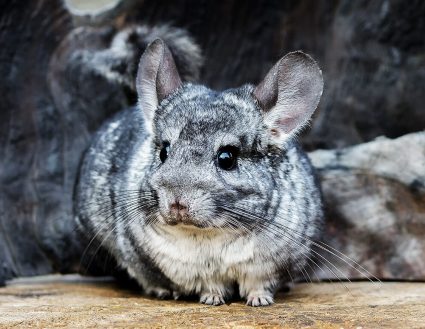
Many people know about hamsters because they are very popular pets. Maybe you even have a pet hamster yourself! But did you know this fuzzy, adorable rodent can also be found in the wild?

There are between 18-24 species of hamster in the wild. Most of them live in Europe and the western regions of Asia.
Hamsters vary in appearance based on their species. Golden (or Syrian) hamsters, the most common pet species, are golden in color. The European hamster has a black belly and brownish-gray fur. The winter white dwarf hamster changes fur color from brown to white as winter arrives.
Hamsters vary in size too. The smallest are 5 cm (2 in.) long. The largest hamsters are 34 cm (over 1 ft.) long!
Hamster Dens
Wild hamsters live in underground dens, usually alone. They’re most active at night. They build their dens under grasslands, meadows, deserts, dunes, steppes, and farms, where the soil is less rocky, and there is food nearby.
Their dens have more than one entrance, and they have different rooms for sleeping, nests for their young, and food storage.
Flexible Spines
Hamsters have flexible spines which allow them to fit around sharp turns in their tunnels. In fact, they are so flexible, they can bend all the way back around, folding their body in half, in order to turn around in a tight space.
Hamster Teeth
Like all rodents, hamsters have teeth that never stop growing. Their incisors (or front teeth) continually grow, which allows hamsters to crack open tough foods and gnaw roots and other hard materials while tunneling.
Cheek Pouches
When you think of a hamster, you probably picture their cheeks puffed out, full of food. In the wild, those large cheek pouches are useful for foraging. Foraging is when an animal looks for food.
When hamsters forage for food, they stuff it into their cheek pouches, which extend all the way down to their hips.

What Hamsters Eat
While domesticated hamsters (pet hamsters) eat store-bought seeds and pellets, wild hamsters eat grains, seeds, and even insects. That makes them omnivores, because they eat both plants and meat.
Hamsters have very poor eyesight and use their sense of smell to find food.
Seed Dispersal
After hamsters forage, they store the food they collected in their dens. Some of those seeds grow into plants. This is called seed dispersal, and it plays an important role in the ecosystem because it spreads the growth of plants.

Hamster Reproduction
Hamsters are territorial and will try to scare off or avoid other hamsters, except during the mating season, which occurs between April and October. During this time, male hamsters visit other burrows to find mates.
Two to three weeks after becoming pregnant, the female hamster gives birth to a litter of up to 12 babies, called pups. The young are blind for 2 weeks, and then are weaned at 3-4 weeks. The mother can become pregnant up to 5 times during the mating season. She raises her pups alone.
Hamsters live 1-2 years in the wild. They fall prey to birds, snakes, and other mammals.
Conservation Status
Several species of hamster, including the golden hamster, are endangered in the wild. One big threat is habitat loss, as people clear land to expand cities and farmland. This causes habitat fragmentation, which means that the places hamsters live and forage get cut off into small sections.
What You Can Do to Help
To help wild hamsters, some people grow plants that provide food for them. If you live near wild populations, you can do this too.
More Hamster Resources
- VIDEO: “Hamster Stuffing Cheeks.” Nature on PBS
- Miller, Matthew. “Wild Hamster: The Intriguing Story Behind the Household Pet.” The Nature Conservancy
- Jaimet, Kate. “Hamsters: From the Wild to Your Bedroom.” National Geographic Kids
- “Wild Hamsters.” International Fund for Animal Welfare
- “Cricetinae hamsters.” Animal Diversity Web
- Bradford, Alina, and Ailsa Harvey. “Hamsters: Diet, Habits, and Types.” Live Science
Quick Fact Sheet

Common Name(s): Hamster
Scientific Name: Cricetinae
Animal Type: mammal
Size: 5-34 cm (2-13 in.)
Lifespan: 1-2 years